
Shraap: What a Curse From an Elder or Saint Means in Hindu Tradition

Some words stay with a family for years. A grandmother who said something bitter before she died. A sadhu turned away at the door who muttered as he left. A father's angry sentence after a marriage he opposed. People carry these memories quietly, and then a run of hard luck makes them wonder about shraap meaning and whether those words became a curse. Families in North York bring me this worry more often than outsiders would guess, usually with real guilt attached. This guide explains what a shraap is in Hindu tradition, using the stories everyone half remembers from the Ramayana and Mahabharata. It shows why the epics treat a curse from an elder or saint so seriously, and why the same stories almost always include a way out. It also covers prayaschitta, the classical idea of atonement, and the practical steps of seeking forgiveness from someone living or honouring someone who has passed. In more than forty years of practice, I have found that the shraap stories are less about doom and more about accountability, and that reading them closely brings people relief rather than fear.
What does shraap mean in Hinduism?
A shraap, from the Sanskrit shapa, is a curse pronounced by a person whose words are believed to carry force, usually because of tapas, age, devotion or a deep wrong done to them. It differs from casual abuse. Tradition links its weight to the speaker's spiritual standing and to the offence that provoked it.
In the epics and Puranas, a shraap is not a spell bought from a sorcerer. It is a consequence. Someone of standing is wronged, and their pain or anger takes the form of a spoken sentence about what will follow. The idea rests on a simple belief: truthful, disciplined people build up spiritual power, called tapas, and their words tend to come true.
Three features appear again and again:
- A real cause. The person cursed has usually done something: ignored a guest, killed without care, insulted a teacher or broken a promise.
- A cost to the speaker. Many stories show sages losing some of their hard-won tapas when they curse in anger. Restraint is praised more than the curse itself.
- A release clause. The curse often names how it will end, known as shaap-vimochan or shaap-mukti.
This is why elders in many Hindu homes are careful with their words, and why younger people are taught to touch elders' feet and seek ashirvad, a blessing, rather than provoke them. The blessing and the curse are two faces of the same belief about spoken words.
A shraap is also different from nazar, which is unintended harm from admiration, and from kala jadu, which is deliberate ritual harm. The evil eye and curses hub lays out how those categories differ.

Which famous curses appear in the Ramayana and Mahabharata?
The best-known include Durvasa's curse on Shakuntala, which made Dushyanta forget her until he saw his ring, and Gandhari's curse on Krishna after Kurukshetra, which foretold the end of the Yadava clan. Others include the curse on Dasharatha by the parents of Shravan Kumar and Gautama's curse on Ahalya.
Each of these stories teaches something specific about how tradition understands a curse.
- Durvasa and Shakuntala. In Kalidasa's play, Shakuntala is lost in thoughts of Dushyanta and fails to greet the visiting sage. Durvasa, famous for his temper, curses her to be forgotten by the one she is thinking of. When her friends plead, he softens it: a token of recognition will restore the memory. The ring does exactly that.
- Durvasa and Indra. In the Puranic telling, Indra treats a garland from the sage carelessly. The curse strips the gods of their fortune, and the story leads to the churning of the ocean. Disrespect, not bad luck, sets it moving.
- Shravan Kumar's parents and Dasharatha. Dasharatha kills their son by mistake while hunting. The grieving parents say he too will die in grief for a son. It comes true when Rama leaves for exile.
- Gandhari and Krishna. After losing all her sons in the war, Gandhari holds Krishna responsible and curses his clan. Krishna accepts the words calmly. The Mahabharata treats this as a mother's grief, not villainy.
- Gautama and Ahalya. Ahalya is cursed into stillness and freed when Rama arrives. Release is written into the curse.
None of these is a random attack. Each follows a real wound, and most end with grace.
Can a parent's or elder's curse really affect you?
Tradition holds that words spoken from deep hurt by a parent, teacher or elder carry weight, especially when the hurt was earned. It also holds that anger alone, without truth or tapas, is weak, and that a parent's love usually outlasts the moment. Guilt and strained relationships often explain more of what follows than any curse.
This is where honesty matters most. When someone tells me their mother cursed them years ago, I first ask what was happening in the family at the time, and what has happened since. Very often the hardship that followed has ordinary roots: a broken relationship with the family, the loss of support that came with it, years of carrying guilt, and the stress that guilt brings to sleep, health and work.
Tradition itself makes several distinctions:
- Words of a wronged elder are treated seriously because they point to a real debt of conduct that can be repaid.
- Words spoken in passing anger are widely believed to lose force once the anger cools, particularly between parent and child. Many elders take their words back the same evening.
- Words from someone who was themselves cruel carry less moral weight. A curse used to control or punish an innocent person is closer to abuse than to dharma.
If the words came during a family argument rather than after a genuine wrong, the guide to words said in anger in families covers that situation more closely.
Where a pattern runs across generations, a chart reading can show whether ancestral factors are present. The comparison of family curse and pitru dosh explains how a reading separates them.
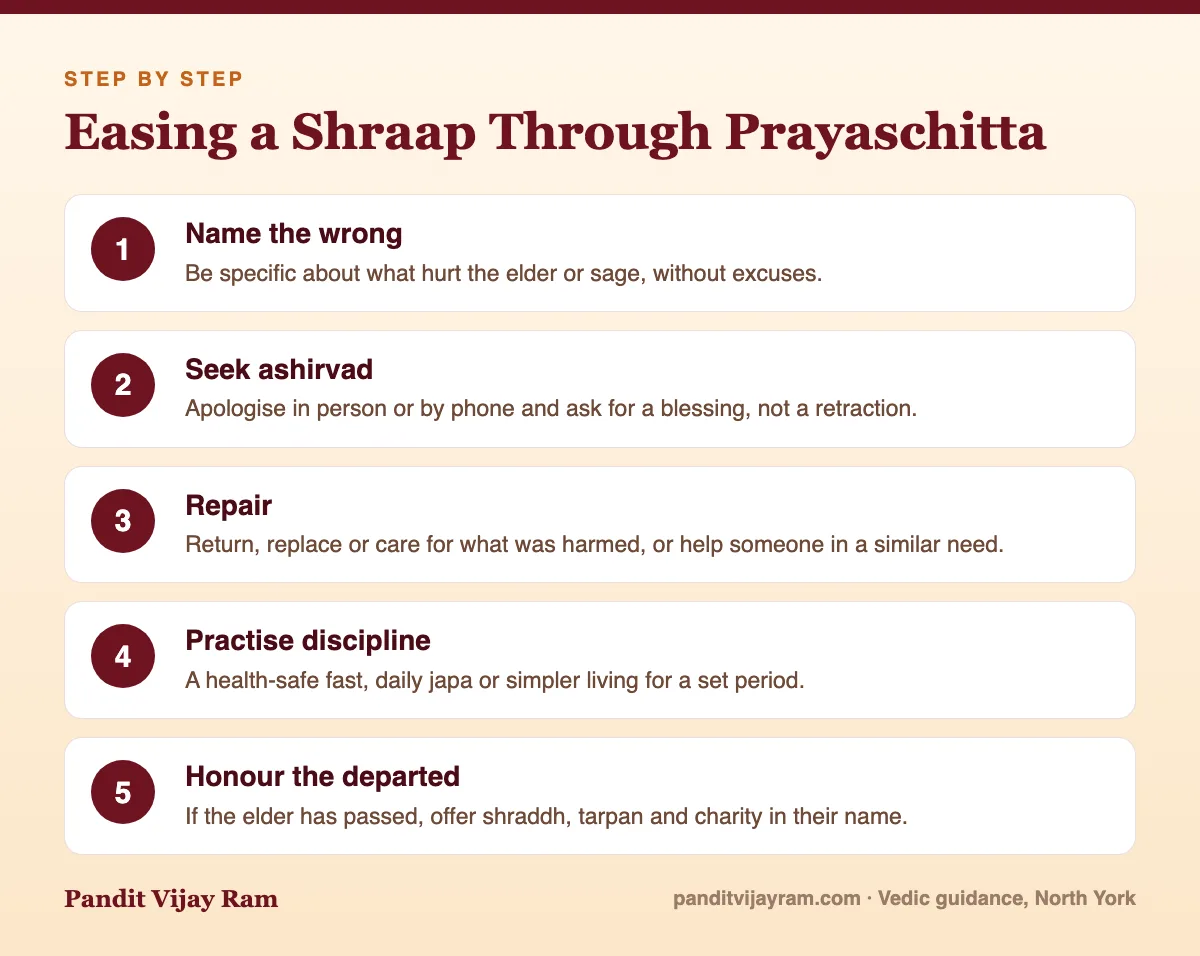
What is prayaschitta and how does it ease a shraap?
Prayaschitta is the Dharmashastra term for atonement: actions that make amends for a wrong and restore inner and social balance. It usually combines sincere regret, repair toward the person harmed, and disciplines such as fasting, japa, charity or pilgrimage. It works on the cause of a shraap rather than fighting the words.
The classical law books list prayaschitta for many kinds of fault, from small lapses in ritual to serious harm. The forms are familiar to most Hindu families:
- Admission. Naming the wrong honestly, first to yourself and, where possible, to the person harmed.
- Repair. Returning what was taken, apologising, caring for the person you hurt, or caring for someone in a similar situation if they are gone.
- Discipline. A fast suited to your health, a set number of mantra repetitions, or a period of simpler living.
- Giving. Food, clothing or help offered to people in need, without display.
The logic is important. If a curse follows an offence, the remedy is to settle the offence. Paying someone to reflect a curse back at the elder who spoke it would add a second wrong to the first. That approach has no place in the shraap tradition, where even gods accept curses with humility.
When the person who spoke the words has died, families often turn to shraddh and tarpan, offering water, sesame and prayer for the departed. A puja or anushthan for atonement can be done in their name, and some families sponsor a meal or a donation on the death anniversary. These acts honour the relationship while releasing the weight carried by the living.
How do you ask forgiveness from someone who cursed you?
Go in person or call if you can, acknowledge what hurt them without arguing, and ask for their blessing rather than a retraction. Touching an elder's feet, bringing sweets or fruit and listening patiently are traditional gestures. If they are not ready, keep the door open and continue your own atonement quietly.
A simple order helps when emotions are high:
- Prepare. Decide what you are sorry for. Be specific. A vague apology often reopens the argument.
- Choose a calm moment. Festivals, birthdays and family gatherings are traditional times for reconciliation because tempers are softer.
- Speak briefly. Name the hurt, apologise and ask for ashirvad. Avoid defending yourself in the same breath.
- Accept their pace. Some elders forgive instantly. Others need weeks. Pressure undoes the gesture.
- Follow with conduct. Visits, calls and small acts of care confirm the apology far more than words.
Sometimes forgiveness is not safe or possible. If the elder was abusive, you do not owe them contact. Prayaschitta can be done privately, and a counsellor can help with the guilt that remains.
For people who also want spiritual protection while this unfolds, our curse and hex removal service begins with a conversation about what happened and whether a ritual is needed at all.
The bottom line
Shraap meaning in Hindu tradition is tied to conduct: a curse follows a real wound and draws its weight from the speaker's standing. The epics nearly always pair a curse with a path to release, and prayaschitta settles the cause instead of fighting the words. Seeking forgiveness from the living, or honouring the departed through shraddh and prayer, is the traditional and gentlest way forward.
Key takeaways
- A shraap in the epics follows an offence and is linked to the speaker's tapas.
- Most famous curses include a release, such as Shakuntala's ring or Ahalya's freedom.
- Prayaschitta means admission, repair, discipline and giving.
- Retaliating against an elder's words adds a second wrong.
- If the elder has died, shraddh, tarpan and charity in their name are customary.