
Love Binding vs Love Attraction Rituals: Where the Ethical Line Is
People often ask me whether there is any real difference between a binding and an attraction ritual, since both are about love and both involve prayer or mantra. The question of love binding vs attraction matters because sellers online blur the two on purpose, describing a coercive ritual in gentle language. I hear these questions from families in North York, across the GTA and from clients further afield, and the confusion is understandable. This article draws the line clearly. You will see what each kind of ritual actually asks for, how traditional ideas such as sammohan and vashikaran fit, the simple consent test I use before suggesting any love remedy, and how to choose a practice that respects both people. In more than forty years of practice, I have found that most people, once they see the line, choose the ethical side without hesitation. They wanted to be loved, not to own someone. The rest of the work is helping them find practices that make them more open, steady and ready for love.
What is the difference between a love binding and an attraction ritual?
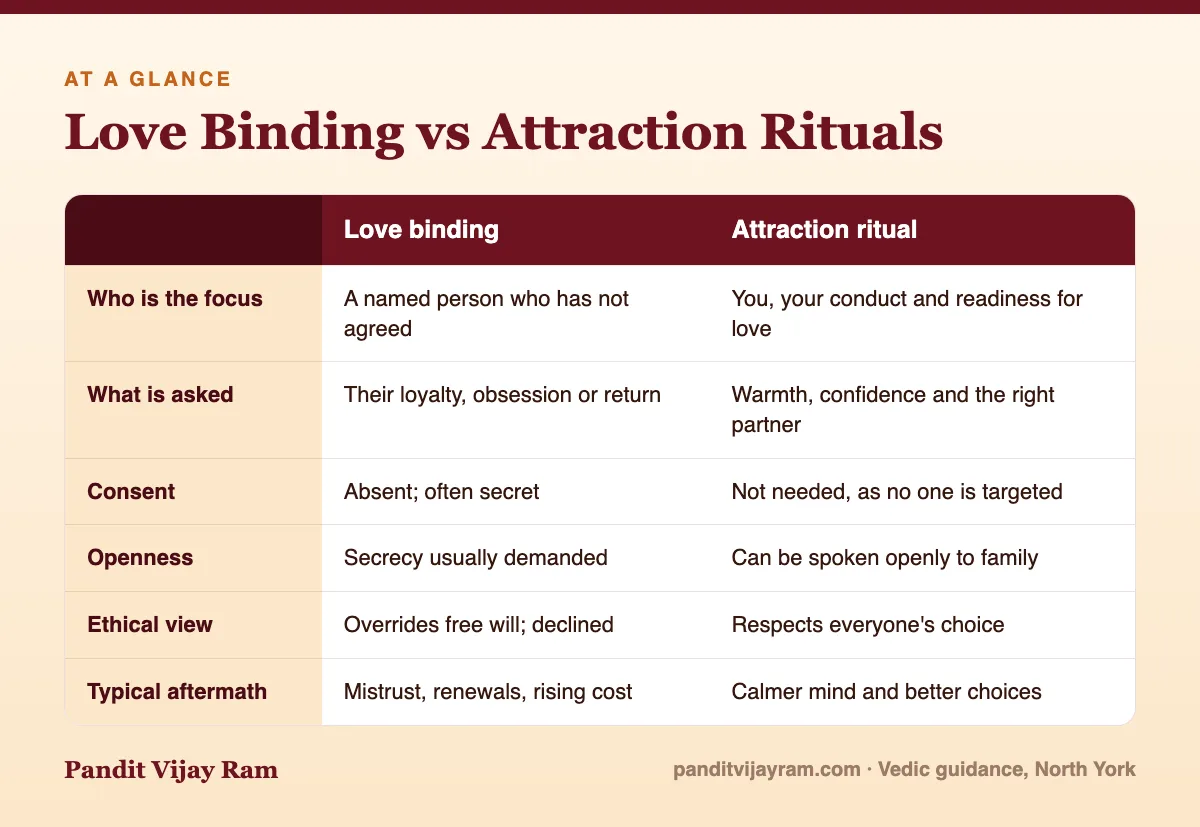
A binding targets a specific person and asks that their feelings, loyalty or choices be changed in your favour, usually without their knowledge. An attraction ritual focuses on you: your radiance, confidence, kindness and readiness for love. It may ask for the right partner, but it does not try to capture one.
The two can look similar on the surface. Both may use a lamp, flowers, a mantra and a chosen weekday. The difference lies in the sankalpa, the stated intention at the start of the ritual.
- Binding sankalpa: "Let this person think only of me, leave their partner and return."
- Attraction sankalpa: "Let me become loving and open, and bring a good partner into my life."
- Harmony sankalpa, for couples: "Let understanding and affection grow between us, if it is right for both."
The first statement names someone who has not agreed, and asks for their surrender. The second and third leave everyone free. That single difference shapes what the ritual is, ethically and spiritually.
The Vedic tradition has many attraction and harmony practices: Friday worship of Lakshmi, the Kamdev Gayatri, Gauri-Shankar prayers for marriage, and Venus mantras. Our pillar guide to love binding, meaning and free will explains why the binding side is declined, and the Venus and 7th house remedies article shows how attraction practice can be matched to your chart.

What is sammohan, and is it ethical?
Sammohan means enchantment or charm. In tantric texts it is listed among ritual aims, alongside vashikaran and others. Understood as personal presence and the ability to draw goodwill, it can be ethical. Used to cloud a specific person's judgement or override their will, it crosses the same line as binding.
Classical ritual literature sometimes groups magical aims into a set of six actions, the shatkarma, which include pacifying, attracting, subjugating and others. Sammohan and vashikaran belong to the attracting and influencing end. Modern sellers often lift these words out of context and promise total control over a lover.
A more grounded reading treats sammohan as the charm that comes from inner steadiness: a clear voice, kind eyes, good grooming, a settled mind. Many people use the word in that sense for public speaking or interviews. Applied to love, it can mean becoming someone others enjoy being near.
How to tell which sense a practitioner means:
- Do they ask for the target's name, photo or birth details without that person's knowledge?
- Do they talk about the person "having no choice" or "being unable to resist"?
- Do they focus on your conduct, confidence and prayer instead?
Yes to either of the first two means the practice is coercive, whatever it is called. Vijay Ram ji's vashikaran page explains how he uses the term only for attraction in one's own life and harmony between willing people.
Where is the ethical line in love rituals?
The line is consent. If the other person would object to the ritual if they knew, or if it asks for their feelings to change without their choice, it is on the wrong side. Rituals that ask for your growth, for the right partner, or for shared harmony stay ethical.
Here is a decision rule you can apply to any love ritual, from any tradition:
- Is a specific person named as the target? If not, the ritual is almost certainly ethical.
- If someone is named, do they know and agree? A married couple praying together for harmony passes. A secret ritual on an ex does not.
- What is being asked for? Your peace, kindness and attractiveness pass. Their obedience, obsession or separation from someone else fail.
- Is secrecy required? Ethical prayer can be spoken openly. Demands for secrecy usually protect the seller, not you.
- Is fear part of it? Threats that stopping will bring harm signal coercion of you, too.
Notice that the line protects you as well as the other person. Coercive rituals tend to come bundled with dependency on the practitioner and escalating cost. Ethical practice leaves you free to stop, change teachers or simply pray on your own.
Where both people are willing, couples can also turn to counselling and to the relationship compatibility reading, which looks at both charts openly to understand friction, rather than secretly steering one partner.
Do attraction rituals actually work for finding love?
They cannot make a particular person fall in love. What people commonly report is gentler: more confidence, less desperation, better choices and a calmer presence on dates or with family introductions. Those changes genuinely improve the chance of a good relationship, which is about as much as any honest practice can claim.
Think of attraction practice as tending a garden rather than pulling a flower. You water, weed and wait. The ritual shapes your inner state; ordinary life does the rest.
Changes people often notice after steady attraction prayer:
- They stop chasing people who are unavailable.
- They take better care of their health and appearance, which lifts mood.
- They are more willing to meet new people through friends, temple or community events.
- They speak more openly about what they want in a partner.
None of these is supernatural, and that is fine. The tradition has always taught that devotion refines the devotee. If you have tried attraction practice and still feel stuck, look at what is blocking you in daily life: an unhealed breakup, family pressure, or anxiety around dating. A counsellor can help with those.
Beware of anyone claiming that an attraction ritual will deliver results by a fixed date. Our article on whether love back spells work explains what tradition promises, what it never could, and what usually decides the outcome.
How do I choose an ethical love remedy?
Choose a remedy that focuses on your own life, can be described openly to family, carries no threats or deadlines, and comes from someone who asks about your health and relationship first. A kundli reading, simple deity prayer and counselling where both partners are willing are the safest starting points.
Before you agree to any love remedy, ask the practitioner these questions directly:
- What exactly will be asked for in the prayer?
- Will anyone be targeted without their knowledge?
- What can this remedy not do?
- Can I learn to do this myself at home?
- What happens if I want to stop?
An honest practitioner answers plainly and does not mind being questioned. They will tell you that no one can promise another person's feelings. They will suggest counselling alongside prayer when the situation calls for it. If someone becomes annoyed, evasive or starts warning you of curses, that is your answer.
If you or someone you know is facing controlling behaviour, stalking or threats from a partner, please treat it as a safety matter and contact the police or a local support service before thinking about ritual of any kind.
For a calm first conversation about your situation, the love problem consultation covers chart insight, prayer suited to you and practical advice. The Kamdev and Rati puja guide describes one of the oldest attraction traditions in detail.
The bottom line
Love binding vs attraction is a question of consent: binding tries to change a named person's will, while attraction asks for growth and the right partner in your own life. Sammohan and vashikaran can be understood ethically as personal presence, but not as control. Use the consent test, choose remedies you could describe openly, and treat any controlling or threatening behaviour as a safety matter first.
Key takeaways
- The sankalpa, or stated intention, decides which side a ritual is on.
- Binding names a captive; attraction asks for growth and the right partner.
- Sammohan can mean personal charm, or coercion if aimed at a person.
- Consent, openness and no fear are the marks of an ethical remedy.
- Attraction practice changes you, which is what genuinely helps.